
Most patients need multiple microneedling sessions to improve acne scars, with 3–5 treatments commonly used in some treatment plans. The exact number depends on the type, depth, and severity of scarring, how the skin responds, and whether additional procedures are needed.
Microneedling works by stimulating collagen production, which can gradually improve the appearance of certain depressed acne scars. However, shallow rolling scars may respond differently than deep boxcar or ice-pick scars.
Understanding your scar type and realistic treatment timeline is essential before deciding how many sessions to schedule.
Which Types of Acne Scars Respond Best to Microneedling?
Microneedling generally works best for certain depressed acne scars, particularly rolling scars and some boxcar scars. These scars may improve as collagen remodeling helps support the depressed areas of skin.
Depressed acne scars are commonly grouped into three patterns:
- Rolling scars: Broad, shallow depressions with sloping edges that create an uneven or wave-like skin texture.
- Boxcar scars: Wider depressions with more defined edges that may be shallow or deep.
- Ice-pick scars: Narrow, deep pits extending into the skin.
Rolling scars and some boxcar scars may respond well to collagen-stimulating treatments.
Very deep ice-pick scars are generally more difficult to improve with microneedling alone. They may require another procedure or a combination treatment plan.
A professional skin assessment helps determine which scars are most suitable for treatment.
Why Are Multiple Microneedling Sessions Needed for Acne Scars?
Multiple microneedling sessions are often needed because collagen remodeling happens gradually rather than immediately after treatment. A series of treatments allows the skin’s natural repair process to develop over time.
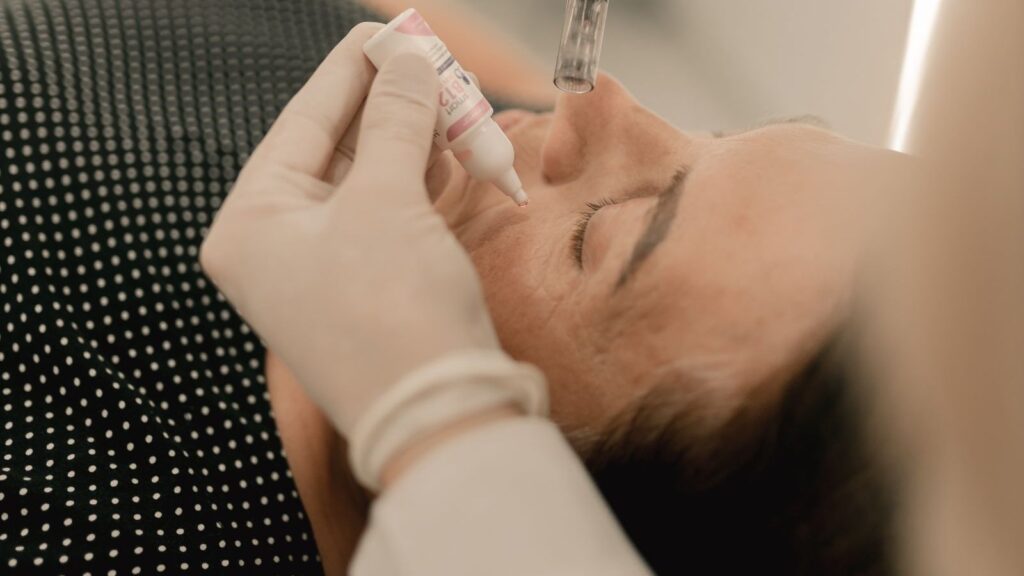
Microneedling creates controlled micro-injuries that stimulate the production and remodeling of collagen.
This repair process continues for weeks after each session. Consequently, one appointment rarely produces the full improvement patients want for established acne scars.
For mild texture concerns, some patients may be satisfied after a few sessions. More significant scarring may require a longer treatment plan or additional procedures.
The correct number of treatments should be based on the patient’s scar pattern and response, not a predetermined package offered before examining the skin.
How Far Apart Should Microneedling Sessions Be for Acne Scars?
Microneedling sessions for acne scars are commonly spaced several weeks apart to allow the skin to heal and collagen remodeling to progress.
Some professional treatment protocols use intervals of approximately 2–4 weeks, but the appropriate timing depends on treatment depth, skin sensitivity, recovery, and the individual’s treatment plan.
Scheduling sessions too close together does not necessarily produce faster results and may increase irritation.
A qualified provider may recommend longer intervals when necessary or adjust the schedule if microneedling is combined with other procedures.
How Long Does Microneedling Take to Improve Acne Scars?
Microneedling results for acne scars develop gradually, with early improvements sometimes becoming noticeable within a few weeks and more meaningful scar remodeling taking several months.
Some patients initially notice smoother-looking skin or improved texture after the treated area heals. However, deeper acne scar improvement takes longer because collagen production and remodeling are gradual processes.
Taking baseline photographs in consistent lighting can help patients assess progress more accurately.
Acne scars often appear different depending on shadows, camera angles, and lighting. Comparing photographs over several months provides a more useful view of treatment progress than checking the mirror every morning.
Can Microneedling Make Acne Scars or Dark Spots Worse?
Microneedling can sometimes cause irritation or post-inflammatory hyperpigmentation, particularly in people whose skin develops dark marks easily after inflammation.
Because the procedure creates controlled micro-injuries, improper technique or inadequate aftercare may increase the risk of unwanted skin changes.
Professional microneedling is often considered suitable for a wide range of skin tones, but careful technique and individualized treatment planning remain important.
Patients who are prone to dark spots should discuss their history of pigmentation changes before treatment.
Following the provider’s aftercare instructions and protecting the skin from sun exposure can help reduce avoidable irritation and pigmentation concerns.
Should Active Acne Be Treated Before Microneedling for Scars?
Yes, active inflamed acne should generally be controlled before microneedling for acne scars. Performing the procedure directly over inflamed or infected breakouts may worsen irritation and increase the risk of complications.
If a patient continues to experience painful, inflamed, or pus-filled pimples, treating the active acne may be the first priority.
Once the breakouts are controlled, the provider can assess the remaining scarring and determine whether microneedling is appropriate.
This is also an important reason to avoid attempting aggressive at-home microneedling on active acne.
Can PRP Be Combined With Microneedling for Acne Scars?
Yes, platelet-rich plasma (PRP) can sometimes be combined with microneedling as part of an individualized acne scar treatment plan. PRP uses a concentrated preparation of the patient’s own platelets.
Some research suggests that combining PRP with microneedling may improve acne scar outcomes for selected patients. However, results vary, and PRP is not necessary for every treatment plan.
The decision should consider the patient’s scar type, treatment goals, available evidence, and cost rather than assuming that additional procedures always produce better results.
Patients interested in combined treatment can learn more about PRP and vampire facial treatments in Allen, TX.
Microneedling for Acne Scars in Allen and Frisco, TX
The Spa by RescueMD offers microneedling treatments for patients from Allen, Frisco, Plano, McKinney, and surrounding North Dallas communities.
A consultation can help identify whether the patient has rolling, boxcar, or ice-pick scars and whether microneedling alone is likely to provide meaningful improvement.
Patients can explore microneedling in Allen, TX or learn more about microneedling for Frisco-area patients.
Location: The Spa by RescueMD, 945 Stockton Dr., Suite 6140, Allen, TX 75013
Phone: 972-332-4397
Frequently Asked Questions About Microneedling for Acne Scars
Can microneedling completely remove acne scars?
Microneedling can significantly improve the appearance of certain acne scars, but complete removal is not usually a realistic expectation. The goal is meaningful improvement in skin texture and scar visibility. Deep or complex scars may require additional treatment methods.
How long is downtime after microneedling?
Downtime after microneedling is usually limited, although redness and sensitivity are common during the first day or two. Some patients also experience temporary dryness, tightness, or flaking afterward. Recovery varies depending on treatment intensity and individual skin sensitivity.
Can I microneedle if I still get pimples?
Microneedling should generally be avoided directly over active, inflamed acne breakouts. Treating active acne first is usually safer because microneedling over inflamed lesions may worsen irritation or increase the risk of complications. A provider can determine when the skin is ready for scar treatment.
Schedule a Microneedling Consultation for Acne Scars in Allen, TX
If active acne has improved but the remaining scars still affect the appearance of your skin, a professional consultation can help determine whether microneedling is appropriate.
The Spa by RescueMD can assess the type and severity of scarring, discuss realistic outcomes, and recommend an individualized treatment plan.
