
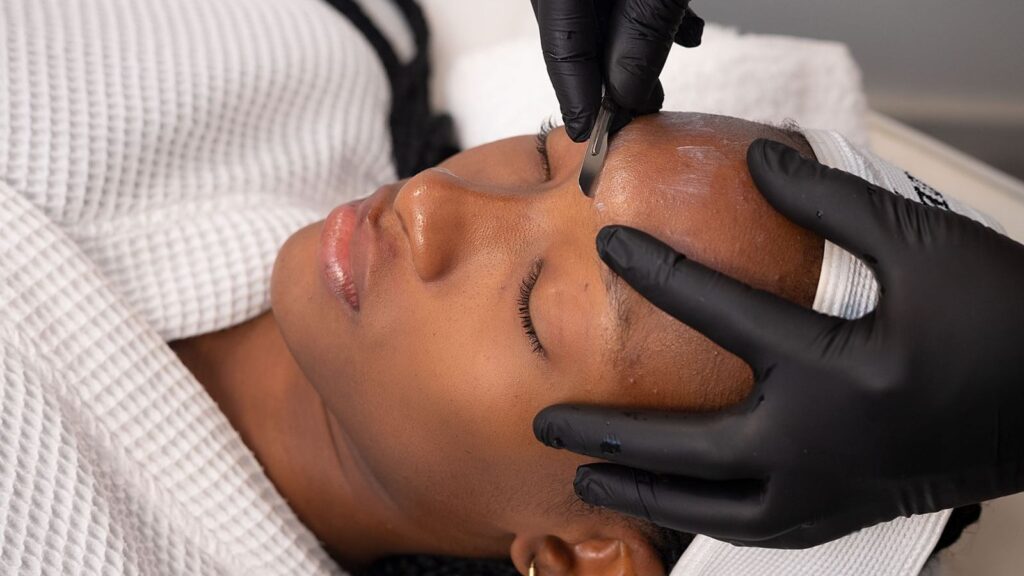
Yes, people with darker skin tones can get chemical peels safely when the treatment is carefully selected for their skin type and concerns. However, chemical peels for dark skin require particular attention to peel strength, treatment depth, and aftercare because excessive irritation can increase the risk of post-inflammatory hyperpigmentation.
The safest approach is not necessarily the strongest peel. A conservative treatment selected by a qualified professional experienced with skin of color may help improve uneven tone, acne marks, and certain pigmentation concerns without creating unnecessary inflammation.
Why Do Darker Skin Tones Need Careful Chemical Peel Selection?
Darker skin tones require careful chemical peel selection because inflammation can trigger excess pigment production, leading to post-inflammatory hyperpigmentation (PIH).
Melanocytes are the cells responsible for producing melanin, the pigment that contributes to skin color. In people prone to hyperpigmentation, irritation or injury may stimulate these cells to produce additional pigment.
Chemical peels work by creating controlled exfoliation and skin injury. If a peel is too aggressive, it may cause more discoloration than the patient originally wanted to treat.
The goal is to create enough exfoliation to address the skin concern without triggering excessive inflammation.
Are Stronger Chemical Peels Better for Dark Skin?
No, stronger chemical peels are not necessarily better for dark skin. Superficial chemical peels may be more appropriate for many patients with darker skin tones because they generally create less extensive skin injury than medium or deep peels.
Social media often presents dramatic peeling as evidence that a treatment is working. However, the amount of visible peeling does not reliably indicate how successful the treatment will be.
A superficial peel with limited flaking may be exactly the right approach for someone prone to pigmentation changes.
Trying to achieve dramatic peeling can expose the skin to unnecessary irritation, discoloration, and other complications.
What Skin Concerns Can Chemical Peels Treat on Dark Skin?
Chemical peels for dark skin may help improve acne, post-acne marks, uneven skin tone, dullness, mild texture concerns, and selected forms of hyperpigmentation. The results depend on the peel formulation, treatment depth, and individual skin characteristics.
Common concerns include:
- Post-acne dark marks: Certain superficial peels may help improve the appearance of post-inflammatory hyperpigmentation.
- Uneven skin tone: Controlled exfoliation may gradually improve areas of discoloration.
- Dull-looking skin: Superficial peeling can remove surface skin cells and improve skin appearance.
- Mild texture irregularities: Some peels may help smooth uneven surface texture.
- Acne: Selected formulations may support treatment of certain types of acne.
- Other pigmentation concerns: Treatment may be considered after evaluating the cause of discoloration.
Melasma deserves particular caution because heat, sunlight, and inflammation can influence pigmentation.
A professional assessment is important before selecting a chemical peel for persistent or recurring pigmentation concerns.
How Should You Prepare Dark Skin for a Chemical Peel?
Preparing dark skin for a chemical peel may involve a period of gentle skincare, pigment management, and avoiding products that cause unnecessary irritation. The preparation should be tailored to the patient’s skin condition and treatment plan.
Some patients benefit from pigment-stabilizing or skin barrier-supportive products before undergoing a peel.
A provider may recommend temporarily pausing certain retinoids, exfoliating acids, or other irritating skincare products before treatment.
Patients should disclose any prescription skincare products, previous pigmentation problems, and reactions to earlier cosmetic procedures.
Do not combine multiple strong exfoliating products in an attempt to prepare the skin faster. Excess irritation may increase the risk of unwanted pigmentation changes.
Why Is Sun Protection Important After a Chemical Peel?
Sun protection is essential after a chemical peel because freshly treated skin is more vulnerable to ultraviolet exposure and irritation. For darker skin tones, inadequate protection may increase the risk of post-inflammatory hyperpigmentation.
Daily broad-spectrum sunscreen, protective clothing, and limiting direct sun exposure are important parts of aftercare.
Patients should also follow their provider’s instructions regarding cleansing, moisturizing, and avoiding irritating products while the skin heals.
Picking, scratching, or forcibly removing peeling skin may create additional inflammation and increase the risk of discoloration.
Patients who cannot consistently follow sun protection and aftercare instructions should discuss the timing and suitability of treatment with their provider.
Can You Get a Chemical Peel if Your Skin Develops Dark Marks Easily?
Yes, people who develop dark marks after acne, insect bites, or minor skin irritation may still be candidates for chemical peels. However, their history of pigmentation changes requires careful evaluation.
Dark marks that remain for weeks or months after inflammation may indicate a tendency toward post-inflammatory hyperpigmentation.
Tell your provider if you have experienced lingering discoloration after acne, insect bites, previous cosmetic treatments, or minor injuries.
This history does not automatically rule out chemical peels. It may influence the recommended peel type, treatment depth, preparation, and aftercare.
Chemical Peels for Dark Skin in Allen, TX
The Spa by RescueMD offers chemical peels in Allen, TX for patients from Allen and surrounding North Texas communities.
A consultation can help determine whether a chemical peel is appropriate for the patient’s skin tone, pigmentation concerns, and previous reactions to skincare treatments.
The Spa by RescueMD also offers other aesthetic treatments, including microneedling for Frisco-area patients, when a different approach may be more appropriate for the patient’s concerns.
Location: The Spa by RescueMD, 945 Stockton Dr., Suite 6140, Allen, TX 75013
Phone: 972-332-4397
Frequently Asked Questions About Chemical Peels for Dark Skin
Are chemical peels safe for Black skin?
Yes, chemical peels can be safe for Black skin when the peel type, strength, and aftercare are appropriate for the individual. Superficial peels are often preferred because deeper treatments can carry a greater risk of pigmentation changes. Treatment should be performed by a qualified professional experienced in treating darker skin tones.
Can a peel worsen hyperpigmentation?
Yes, chemical peels can worsen hyperpigmentation if treatment causes excessive inflammation or skin injury. This may lead to post-inflammatory hyperpigmentation, particularly in people prone to dark marks. Careful peel selection, appropriate preparation, and consistent aftercare help reduce the risk.
Should darker skin avoid all medium or deep peels?
Not necessarily, but medium and deep chemical peels require additional caution in darker skin tones. These treatments carry a greater risk of pigment changes and scarring than superficial peels. Whether a deeper peel is appropriate should be determined individually by an experienced medical professional.
Schedule a Chemical Peel Consultation in Allen, TX
Having darker skin does not automatically mean chemical peels are unsuitable. The most important consideration is choosing a treatment approach appropriate for the patient’s skin tone, pigmentation history, and individual concerns.
Schedule a chemical peel consultation with The Spa by RescueMD to discuss your skin goals and whether a chemical peel is an appropriate option.
